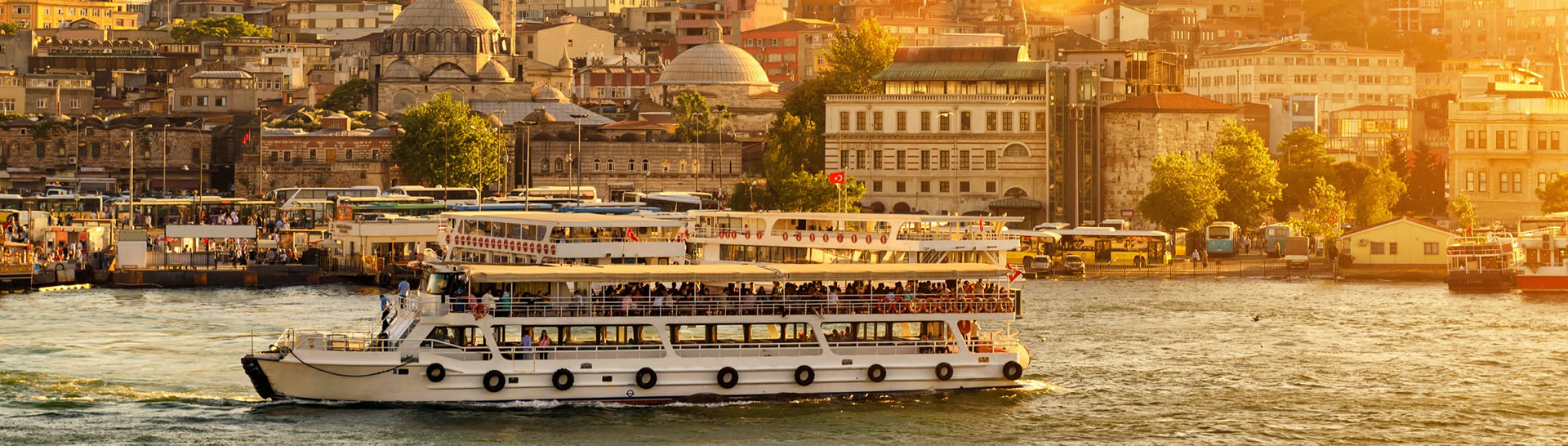
The water boiled angrily as the moving boat trapped it against the jetty. From his seat inside, Levent saw bits of rubbish spinning crazily in the eddy and frowned at how dirty the water had become. Looking up, he was thankful for the bright sun and blindingly blue sky; no hint of the damp fog that hung over the city some mornings.
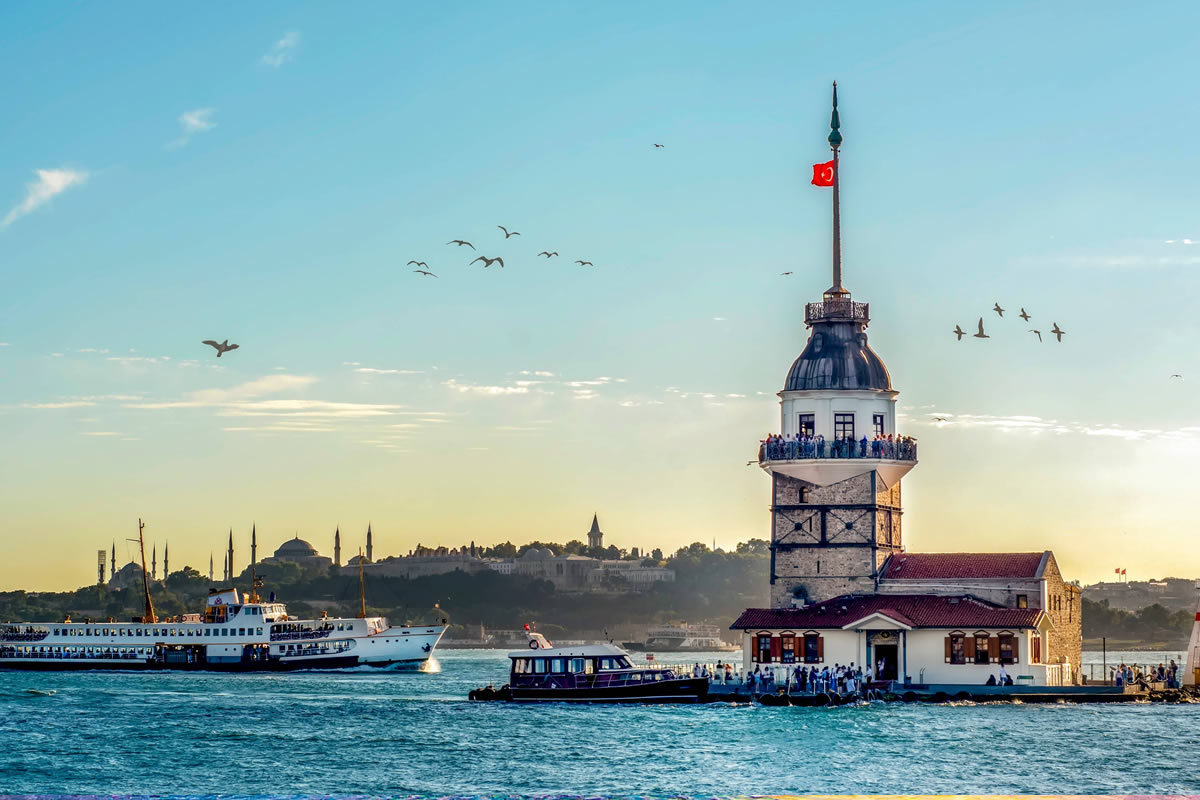
Across the Bosphorus, he could see the skyline of the European shore: the Palace of Topkapi perched on its hill, with minarets sprouting all around and facing it over the Golden Horn, the even older Galata Tower. The view should be familiar ‒ he had made this crossing hundreds of times during his youth ‒ but absence had given it an unexpected novelty.
He turned from the window and looked round the covered deck of the steamer. It wasn’t really a steamer anymore ‒ the boats all had diesel engines and the smell of fuel tainted the air but the name had stuck. They had a sort of old-world charm with their long, low profile and white and yellow colouring. The interior, with its carved wooden benches and brass finishings, hadn’t changed since he was a boy.
The other passengers were a mixed bunch: a few students with wild hair and bright clothes; some civil servants in cheap suits. Most, he guessed, were travelling to dull jobs as shop assistants, secretaries, bus drivers. There were only one or two like him, whose expensive clothes and hand-made shoes set them apart.
At the top of the stairs from the lower deck was a small café. The two men behind the counter wore dark green waistcoats. One was pouring tea from a huge metal pot into small glasses laid out on a tray, the other was following him round, adding boiling water until the tea glowed a deep amber. When they had filled all the glasses, the first man picked up the tray and wove his way among the passengers, calling ‘Tea! Hot tea!’
Levent had watched him every morning that week and wondered how he was always so cheerful. This morning he signalled to the tea man, handed over a couple of coins and took a glass, adding both cubes of sugar from the small saucer. At home, his wife nagged him about the amount of sugar he consumed but here he was free to indulge his sweet tooth.

He looked out of the window again and saw that they had passed the Grand Haydar Pasha Railway Station and were now heading across the busy waterway. He decided to go outside to enjoy a cigarette with his tea. His wife didn’t nag him about his smoking because he had given up years before, but on his rare trips back here he liked to indulge the forbidden craving.
The air was fresh and he turned up the collar of his cashmere coat. He had forgotten how the gulls always raced the boat, following it from one shore to the other, catching in mid-air the bits of bread rings and other scraps thrown by the passengers. The channel, he saw, was busy. There were several other steamers crossing from different jetties and a huge tanker led by a toy-like tugboat was progressing majestically along the straits. At this early hour, a single pleasure cruiser was taking tourists down the Bosphorus and bobbing about amongst all this traffic was a myriad of little fishing boats.
Levent put his glass down on the wooden bench and turned towards the boat, fighting to light his cigarette in the wind. When he turned back, the tea man was standing beside him. Levent offered the packet of cigarettes and the man took one and lit it easily in his cupped hand. The wind whipped the smoke from his mouth.
‘I’ve seen you on the boat all week, Abi,’ he said, using the term ‘older brother’ to show respect, though Levent guessed they were of a similar age. ‘Forgive me asking, but where are you from?’
‘I grew up here but I’ve lived in New York for fifteen years. My company has sent me over to do some work in the office in Taksim Square. I’m staying with my sister in Uskudar, so I have to cross over every day.’
‘It must be nice to be with family if you are usually so far away,’ said the tea man, smiling.
‘I suppose so,’ said Levent less certainly. ‘They have the television on all the time and my nephews fight a lot. I think I might have been more comfortable in a hotel near the office but my sister would never have forgiven me. Now you tell me, how long have you been doing this job and why are you so happy every morning?’
‘I’ve been working on the ferries for nearly ten years and how could I not be happy, Abi?’ asked the tea man. He lifted both arms to indicate the two shores, his cigarette still held in one hand. ‘Every day I travel from Asia to Europe and back! I get to see the sights of this amazing city. Look! There is the Palace of Sultan Suleyman the Magnificent and over there is Galata, where the Ottoman soldiers carried their ships overland to reach the Golden Horn and take the city.’
‘This history is what makes you happy?’
‘It is a part of it Abi, but there is more too. Allah has blessed me with a wife who takes care of me and two healthy children. We have a place to stay – nothing special but my wife has turned it into a comfortable home – and we have enough food to eat and good friends to share it with. My children are getting an education so they will, God willing, find good jobs and also be able to take care of their families. What about you Abi, are you blessed with children?’
‘Three. They are eleven, nine and two and already their demands exhaust me. My son wants a new telephone, my daughter wants a horse, though where she plans on keeping it in the city I have no idea. And my wife wants our youngest to go to a private kindergarten. Aren’t your children always asking you for things?’
‘I think, Abi, my children know to keep their requests small. My daughter is also eleven and she started Middle School this year. She was delighted with the new uniform and winter boots we bought her. My son is six and his favourite treat is to come on the boat with me on weekends and holidays.’
‘But don’t you worry you might lose your job and be unable to take care of them?’
‘Certainly, that would be a terrible thing to happen!’ said the tea man with a shudder. ‘But I have family. My father is gone, may God bless him, but my mother and my brothers and sisters would never let us go hungry. Besides, if I worried each day about the awful things that might happen, I wouldn’t enjoy the wonderful things that are happening now.’
The boat was heading towards the Kaputash Terminal. Levent heard the engine labour as they pulled up alongside the jetty and people started to stream down the stairs towards the gangplanks. Behind the glass doors of the terminal building, he could see an equal throng of people waiting to board the boat. He knew what the tea man had just said was something important but thoughts of work were starting to distract him from their conversation. He shook the man’s hand and hurried down the stairs, through the terminal and up the hill towards his office.
The following morning Levent returned to America and at home he told his wife and children about his meeting with the tea man. He wanted to show them that happiness didn’t depend on money or the things it could buy, that they should appreciate all that they had and enjoy today instead of always looking to tomorrow when they might have more. But sitting in his luxury apartment, surrounded by beautiful things, he found it hard to make his words convincing, even to himself. His wife just smiled at him as she cleared away the dishes and his children grimaced before trailing off to play computer games and chat with their friends on the phone. Over the following weeks, he thought once or twice of the tea man, but eventually he forgot about him and his secret.
But the tea man never forgot about the rich businessman. He travelled the world in his expensive clothes and could buy his children everything they wanted. Even if he lost his job, he would probably have enough money to live the rest of his life in comfort. But he would never understand the secret to being happy and for this the tea man pitied him.