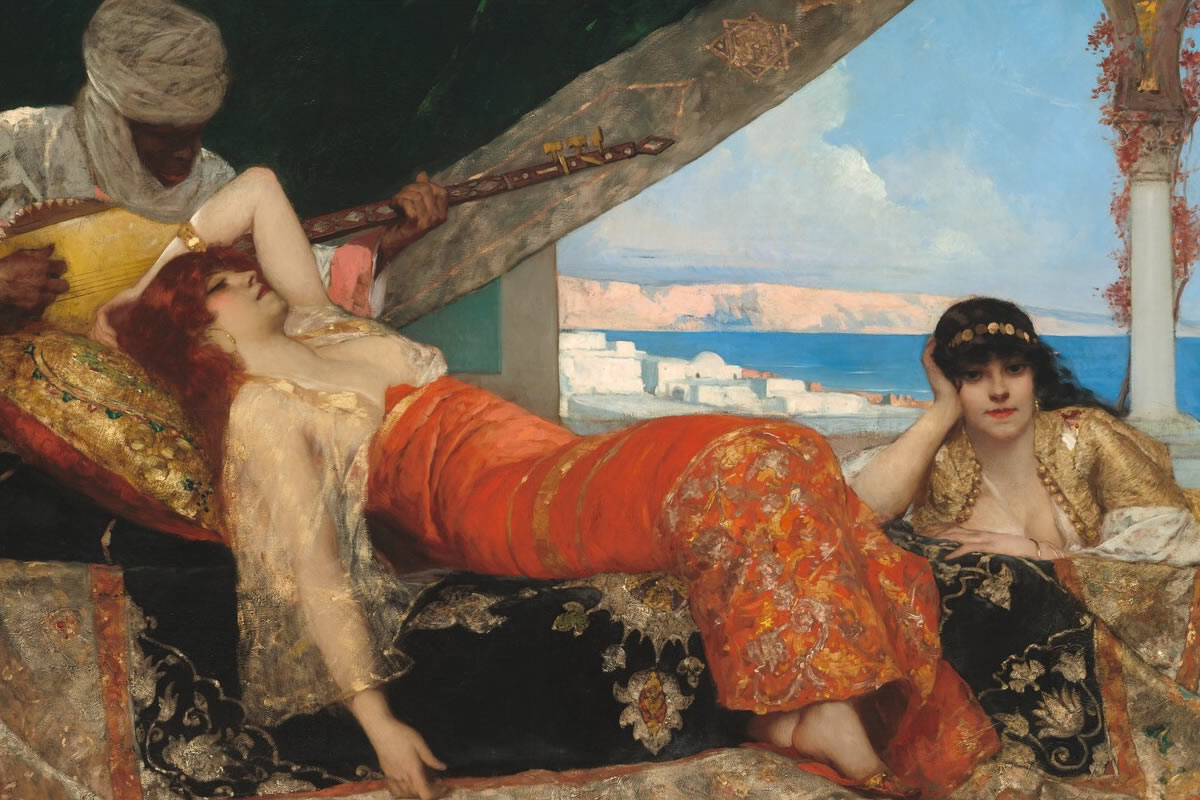
In the Western world, the word harem used to conjure images of scantily-clad concubines lounging around waiting for visits from the man of the house, and arguing over his favours. The women were both scorned as immoral and pitied as prisoners, cut off from the world and subject to the whims of their master. This idea was created by the male travellers of the time, none of whom would have been allowed anywhere near the harem. In fact, it was much less exotic than they imagined!
The harem was the women’s living quarters in wealthier households of the Ottoman Empire. Residents typically included a wife, the head of the household’s mother, female relatives, their children and female slaves to perform the chores. Despite the legality of polygamy, many men took only one wife, partly because they were required to treat them all equally – a challenge in itself – and partly because having more than one seldom made for a peaceful household!
Apart from the occasional visit from a doctor, no men from outside the house were permitted to enter the harem, which was run by the most senior-ranking woman (the wife or her mother-in-law). The reason usually given for keeping the women isolated in this way, was to protect them from the pressures of the rest of the house where business was conducted, and to allow them to focus on taking care of the children and running the household. In later times, girls received training for these tasks, with lessons covering subjects such as keeping accounts, home pharmacy and nutrition.
Though they spent a lot of time there, the women were generally not confined to the harem. In most households, they were able to leave the harem to visit the ladies of other houses, to go on picnics and for shopping trips. They also received plenty of visitors in the form of friends, vendors and entertainers and reports describe frequent celebrations inside the harem, marking everything from a baby’s first tooth to a young man’s entrance into the military.
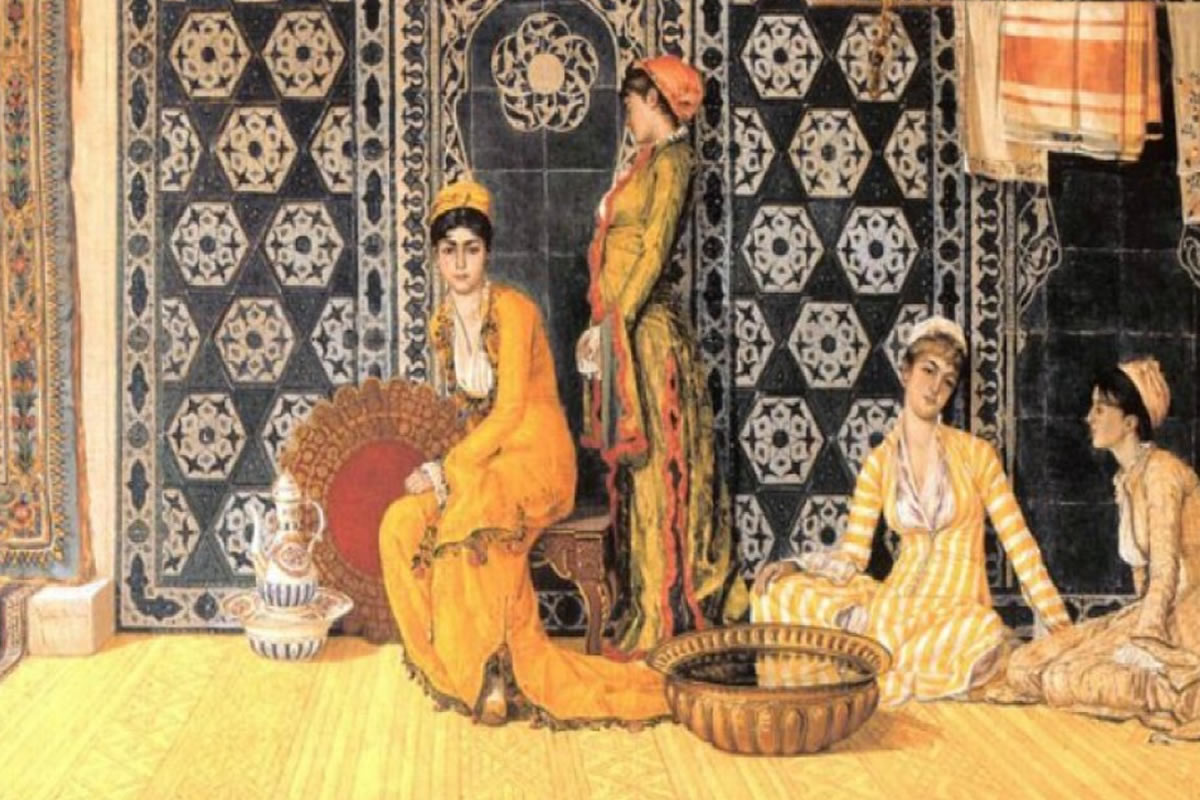
Even the slaves who did the majority of the work in the harem were mostly treated well. They typically arrived there as young girls and were taught skills and accomplishments. Later they were often emancipated and could choose to stay in the household or be married off. Arranging a good match for their slaves reflected well on the ladies of the harem, who were also generous in providing a trousseau. For many girls, slavery was their best chance for social improvement, which explains why Western do-gooders trying to end the tradition were met with fierce resistance from the families of potential slave girls.
Perhaps the most surprising thing about the harem is the financial freedom enjoyed by its residents. Women were allowed to own money and property and before a woman could marry, the two families agreed the sum of the ‘mahr’ which the groom would pay to the bride. It belonged to her and she was free to spend it how she chose. Ottoman Law formalised this and other rights, and the women were not afraid to turn to the courts when necessary. By contrast, in eighteenth and nineteenth-century Britain, a woman’s property belonged to her husband, who was free to divorce her and leave her penniless.
The Harem in the Imperial Palace was different in terms of both scale and confines. In Topkapı Palace, it consisted of more than 300 rooms, nine baths, two mosques, a hospital and a laundry, and housed the sultan’s female relatives and his concubines (for a long time, Ottoman Sultans did not take wives). The women were ruled over by the sultan’s mother and kept in order by eunuchs who guarded the harem. Within its high walls, rank was of the utmost importance and intrigue and plotting were rife.
However, even within this cloistered community, the young girls were given an education, and many of the concubines were married off to high-ranking men (called Pashas). The senior women in the harem had a surprising amount of political influence and the 150-year period starting in 1534 when their power was at its height, is known as ‘the Sultanate of Women’.
The harem was, then, both more functional and less repressive than imagined in the West. In the eighteenth century Lady Montagu, one of the first Western women to visit the region, wrote of the male travellers’ accounts that they were ‘generally so far removed from the truth and so full of absurdities’ that she was ‘very well diverted with them’ – as, we might imagine, were the men who fantasised about rooms full of half-naked concubines!